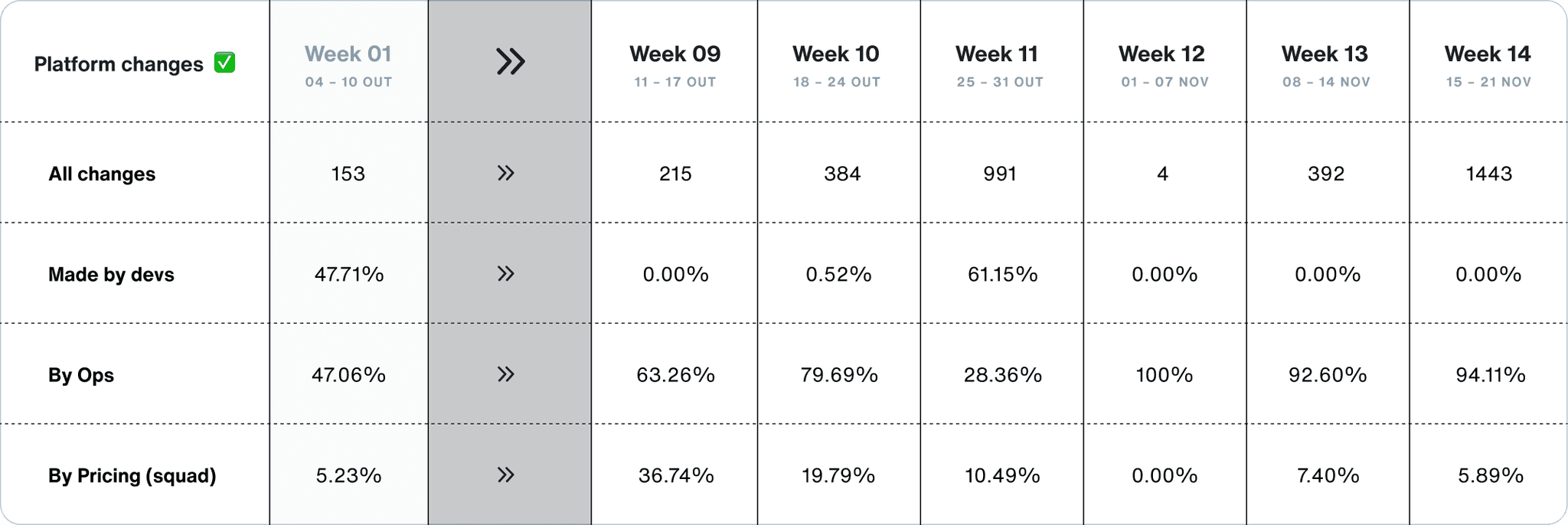
I led the redesign of the data import process on James. This solution allowed Operations to work autonomously, freeing up engineering resources and providing data accuracy throughout the platform.
Role
Product Designer
Year
2020
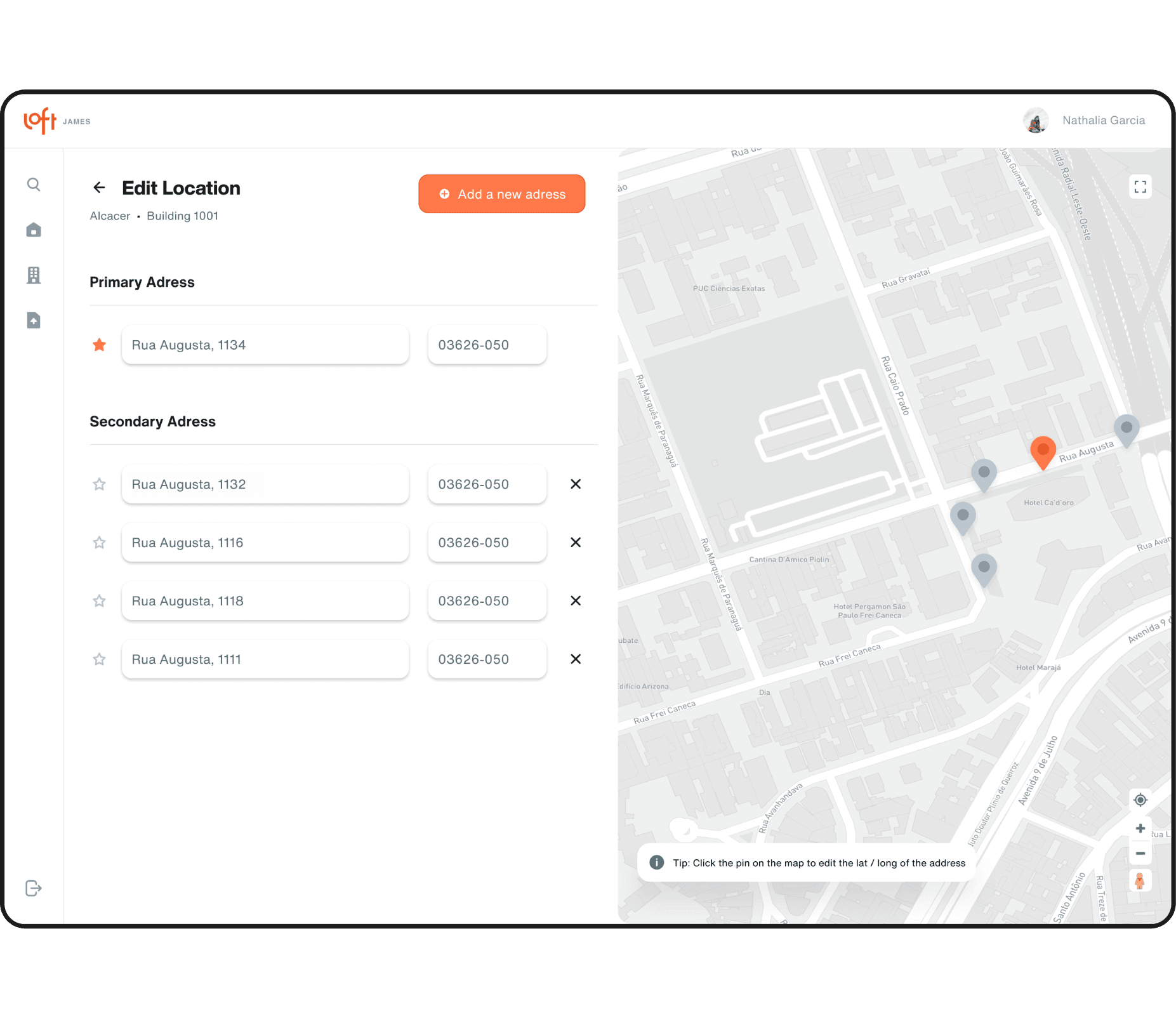
People don’t know how much they should sell their apartment for, what price it should be, or how they can compare two options.
Websites that should help, make the experience even worse with duplicated ads, conflicting info, low data accuracy, and limited coverage.
The Real estate data is pretty bad. Every stakeholder involved has a bad experience.
The user is afraid of making bad decisions with the information they have.
Low data accuracy generates less liquidity for apartments available for sale.
Develop products and tools to import external massive RE Data to the platform.
· Allow operation to process new regions data in a few period.
· Increase Real Estate Data coverage in our Database.
· Increase consistency and reliability of loft real estate data.
Develop products and tools to allow other people/products to consume and add data in the platform.
· Increase real estate data coverage in our Database.
· Increase consistency and reliability of loft real estate data.
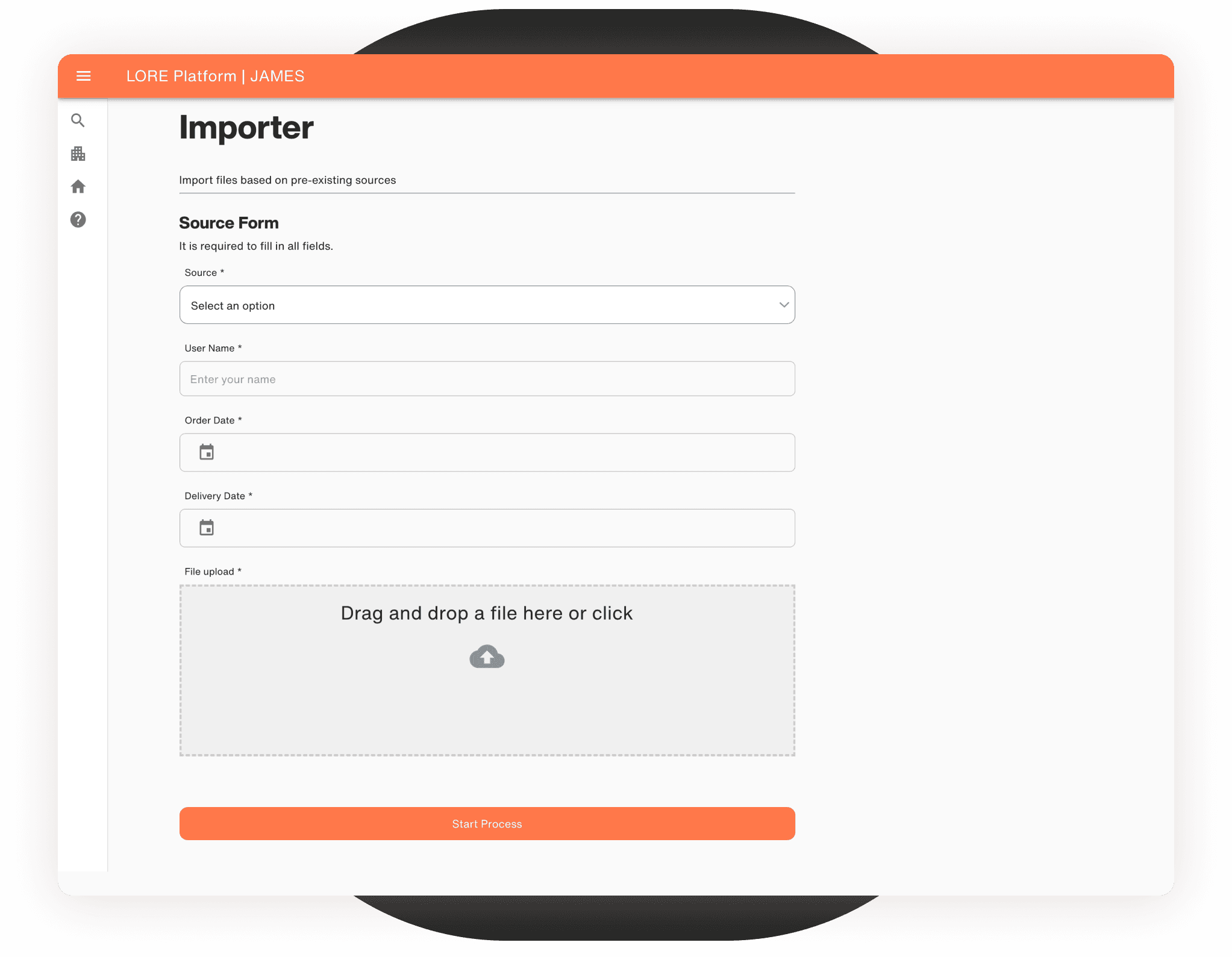
As the first designer responsible for the platform, I redesigned the data import process from external sources, empowering our operations to fix data without requiring engineers' help.
This was the first step towards enabling operations to work autonomously, eliminating engineers' manual work, and improving data accuracy by keeping information on a single platform.
The initial version of the import process was limited, and the outcome was quite mixed. When you uploaded a file to the platform, the process generated six different spreadsheets for the user to analyze. Only developers understood how to use this process to edit information separately. After that, it was necessary to re-upload the file and start a new import process to guarantee that the data was processed successfully.
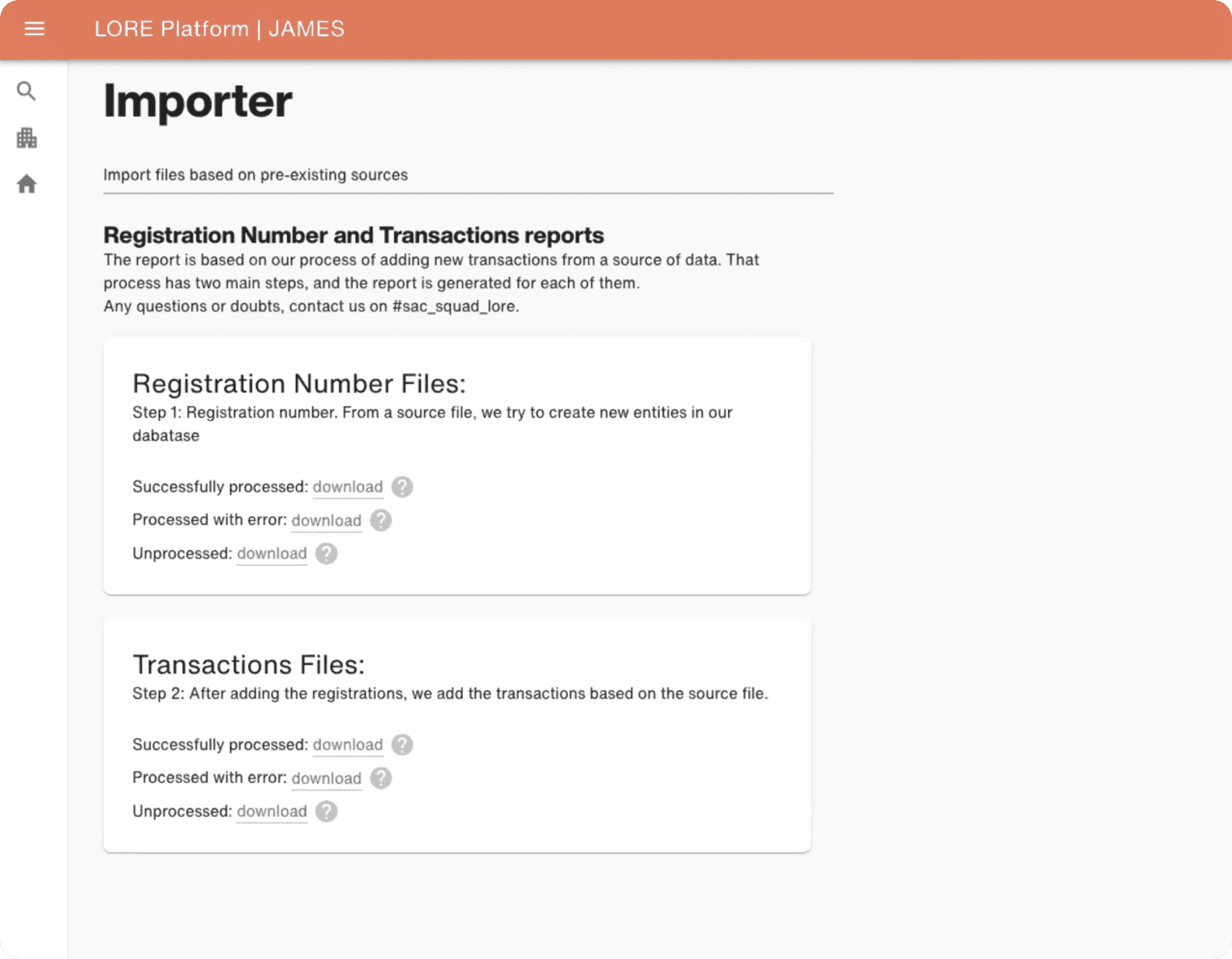
The engineers need to fix real estate data manually. There's no tool for the operation to do this without their input.
Operations spent hours per week trying to discover inconsistent data between different RE databases teams use.
LORE implemented a rotation system for engineers to update the LORE database with RE data manually. However, they spent at least 30 hours per month on these changes.

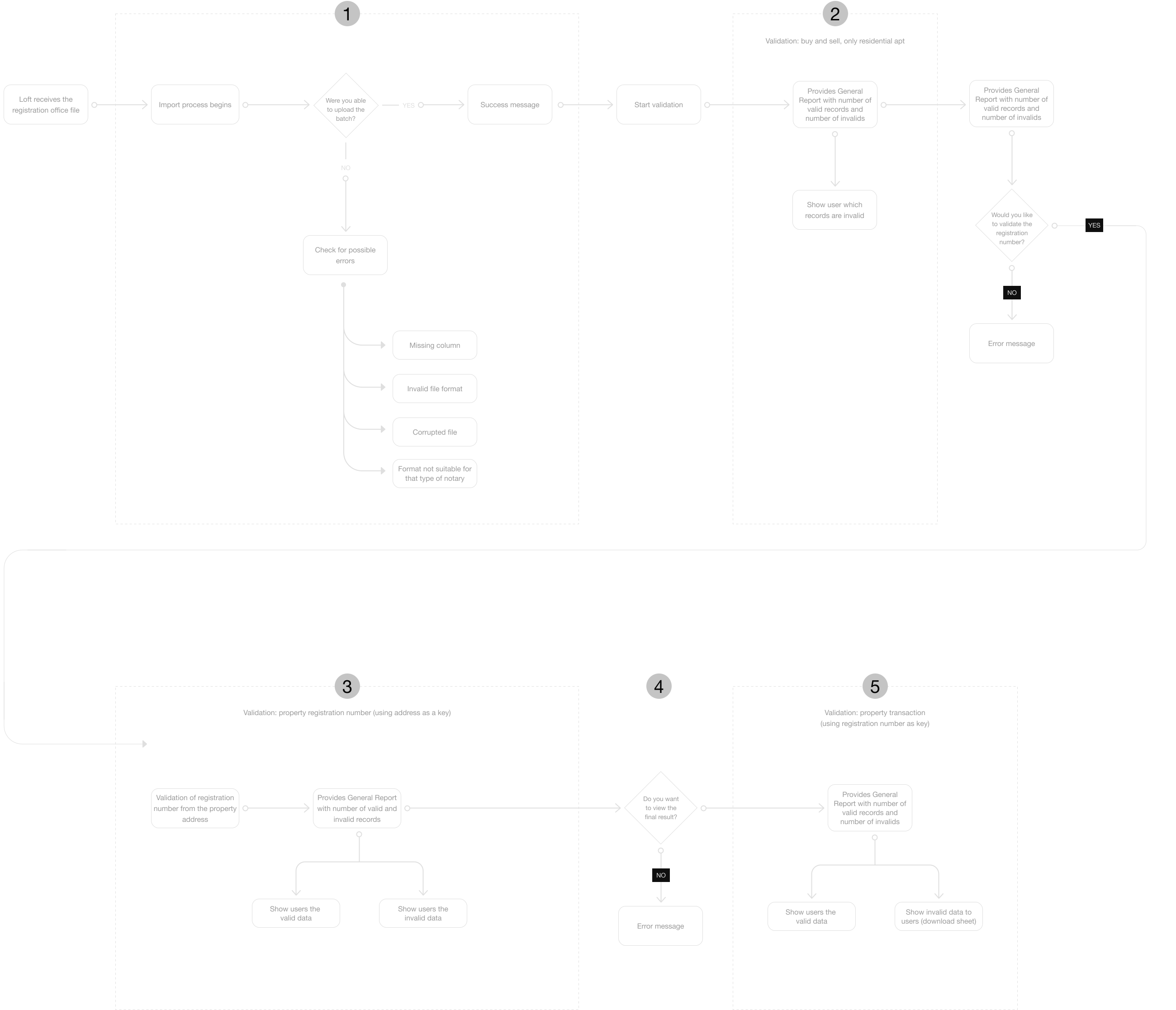
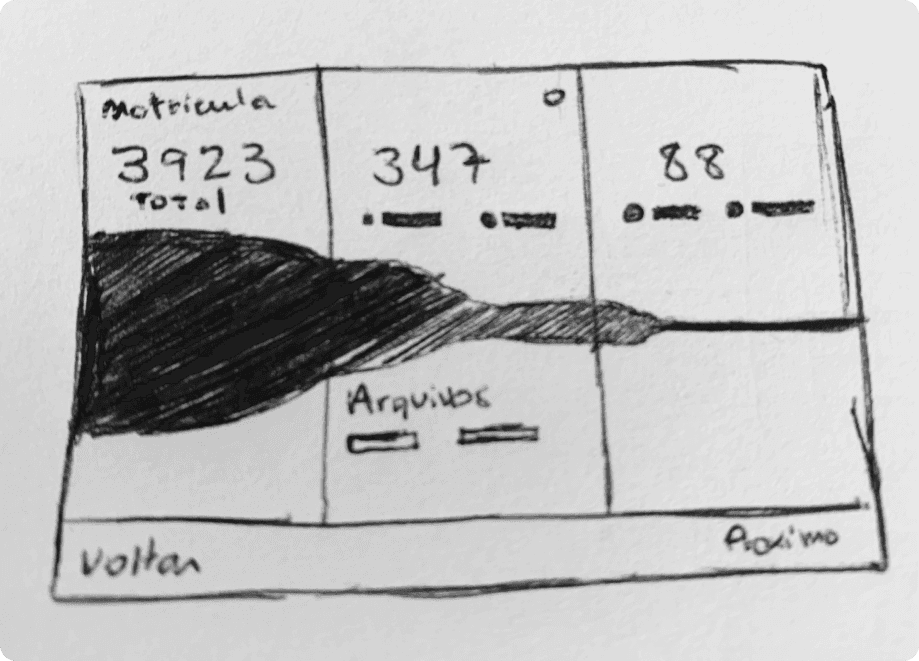
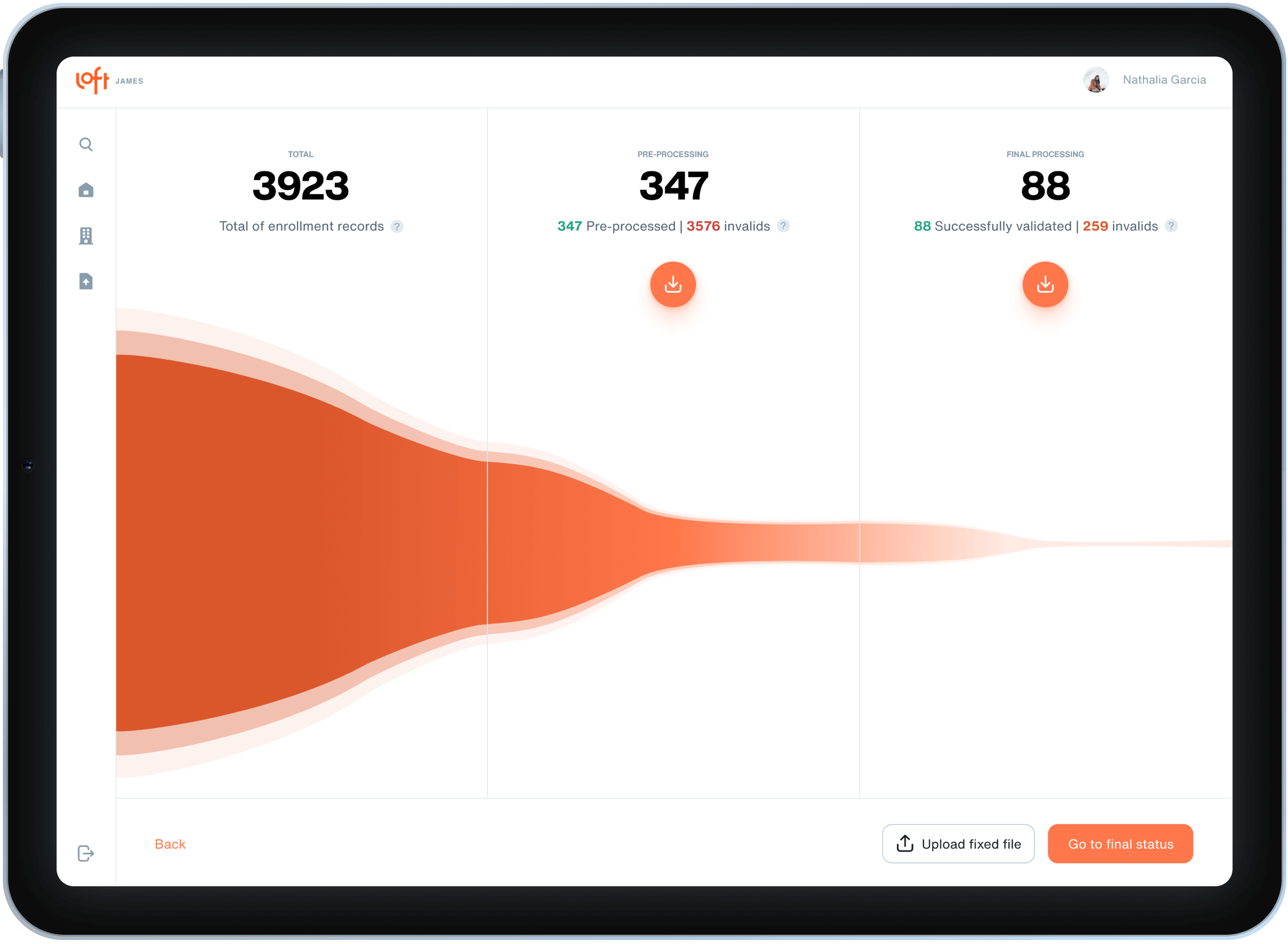
The second version was designed to display a funnel showing each step of the process along with the final result. The collected data was broken into two categories: transactions and data addresses.
In order to enrich a real estate database with more data accuracy, we needed to fix duplicated buildings on James Platform, which consists of buildings that contain the same address but have different towers.
However, only engineers were able to change information manually through our database because we do not have a tool to help Ops work autonomously.
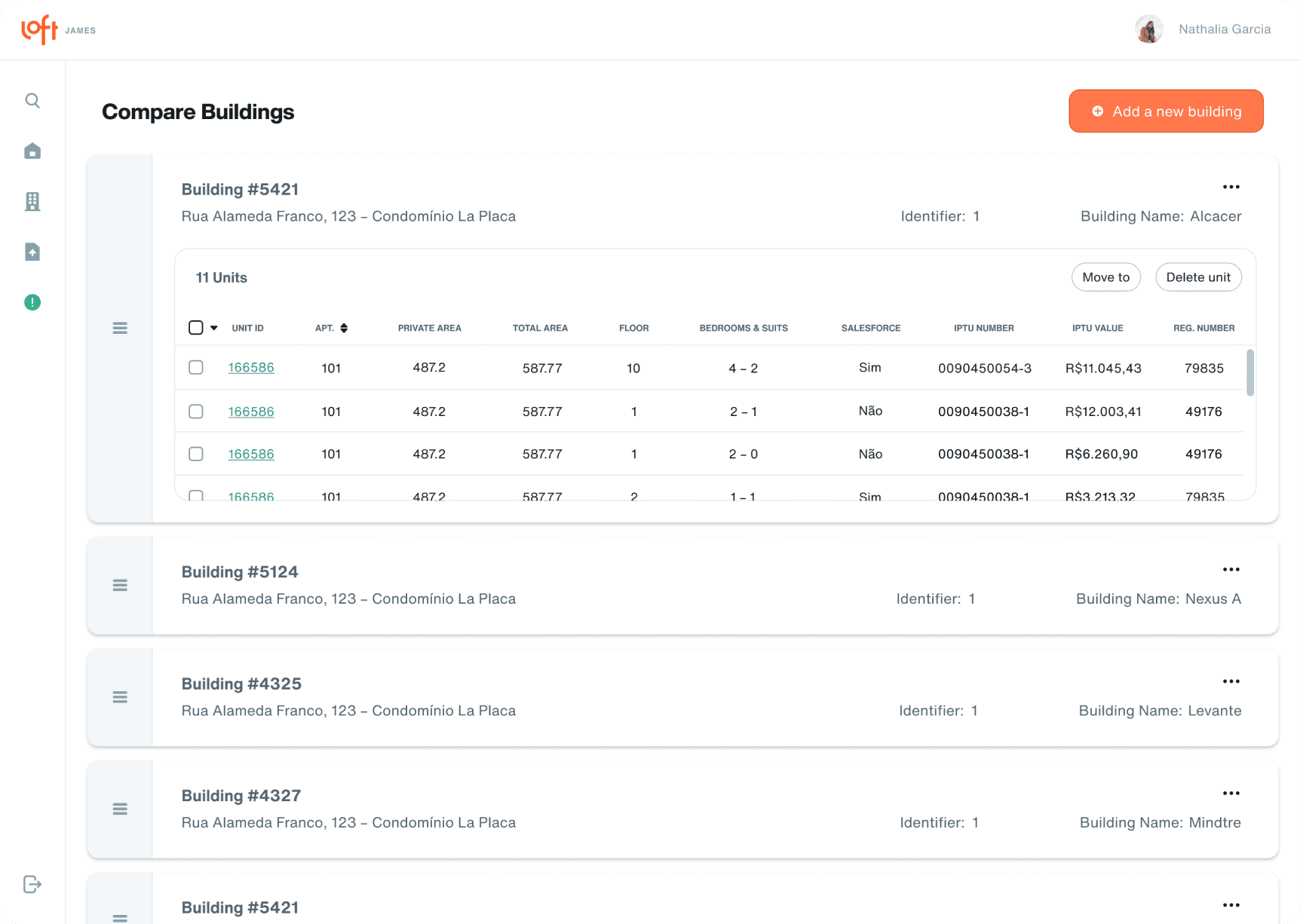
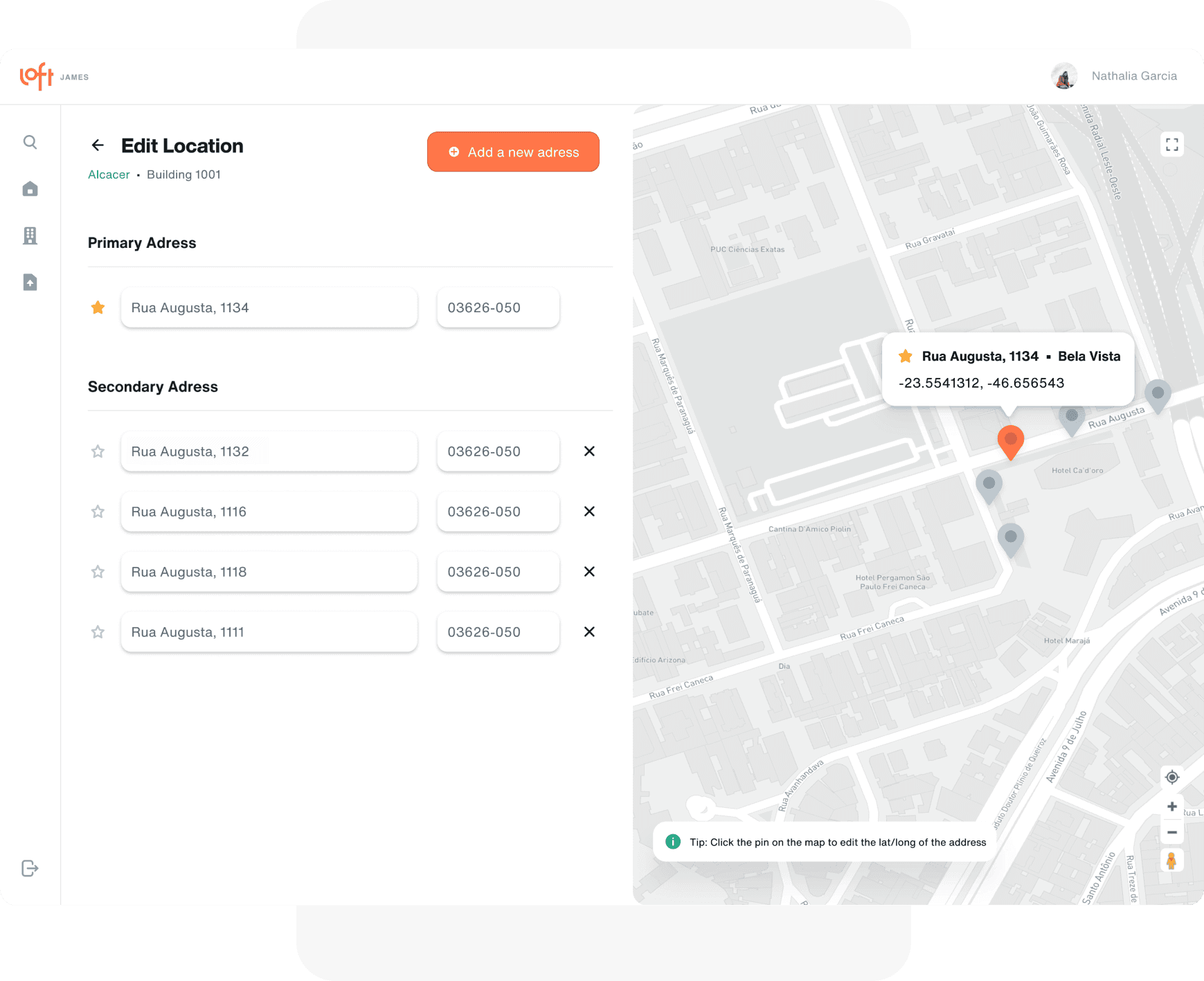
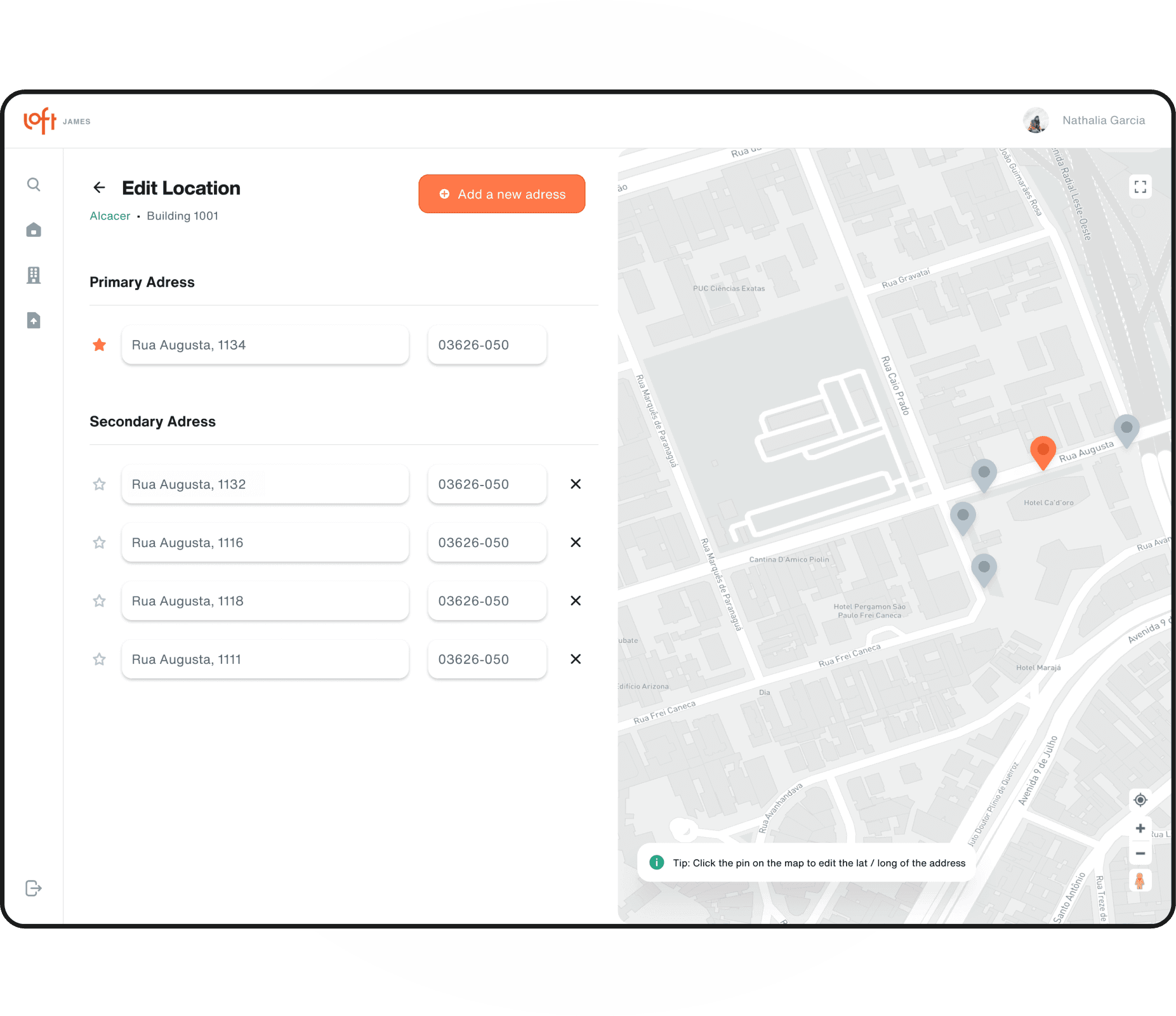
The operation could not change the latitude and longitude of an apartment, which often caused confusion about the building's exact neighborhood.
A wrong latitude/longitude location can affect an apartment's price depending on its neighborhood.
The final and most important step was to talk with teams that utilize their own API to comprehend the reason behind not using LORE as their primary database. The main reason was the data accuracy, which was often dubious and hard to change in LORE due to its lengthy process.
With the new updates, LORE solves these basic needs faster, but we still wanted to improve collaboration in the platform. So we started to communicate every new feature we made to help specific teams to get onboard.

With these new features, we were able to revert the game and help the operation to work autonomously, without depending on the developers to carry out their tasks.